
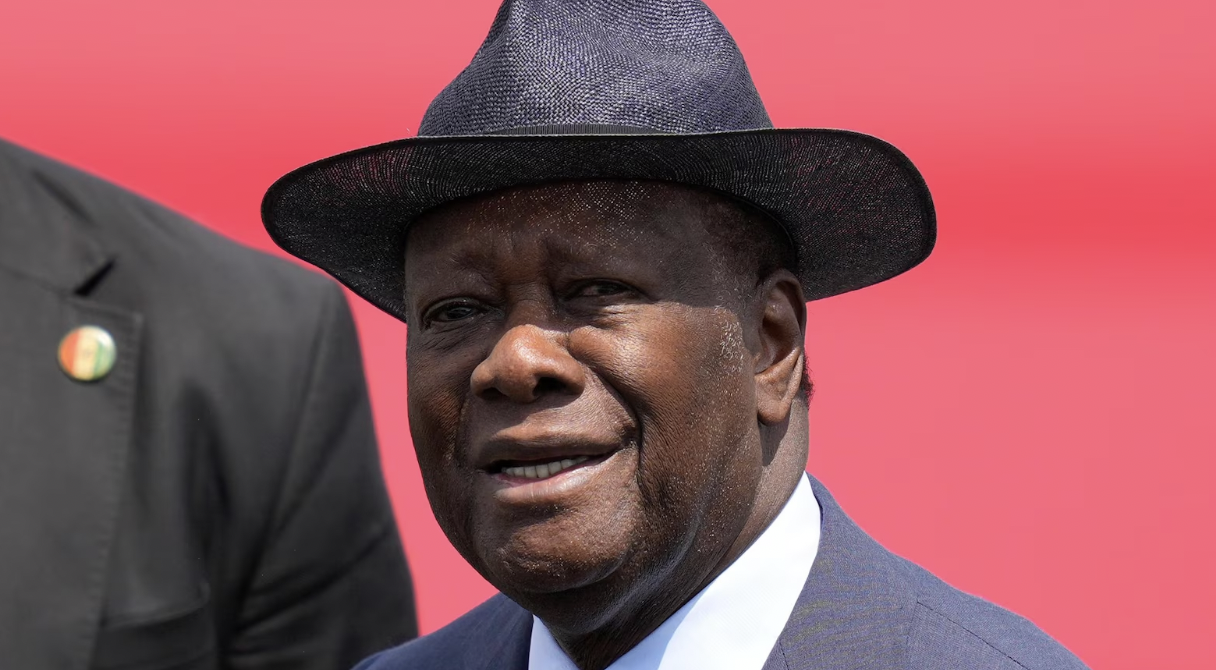

During his Independence Day speech, Ivory Coast President Alassane Ouattara announced that he had decided to run for the 4th time, in the 2025 presidential elections.
The 83-year-old leader expressed his intention not only as a promise to keep up the national unity but also to maintain the country’s economic growth.
At first sight, this message is a turning point from his previous declarations, according to which he guaranteed by a large margin that he would resign after his current mandate. Ouattara’s first term as president has been seen as one that brought re-elections in 2015 and 2020, with the last one being very controversial.
The opposition even went as far as boycotting the election in 2020, which has been the source of disputes, after Ouattara announced that he was going to run for a third mandate following the death of his chosen successor, Amadou Gon Coulibaly.
Most of the debates and arguments about Ouattara’s term after the initial two-term limit have been based on the Constitution. Although the Constitution explicitly stipulates that the president can only serve two terms, the 2016 changes have effectively reset the clock with the government’s reading as confirmed by the Constitutional Council.
Moreover, these parties like the Democratic Party of Côte d’Ivoire and the Ivorian Popular Front, which are at loggerheads with Ouattara’s statements asserting that centralized power is the main threat to democracy, have maintained that such long presidential tenures “undermine vital institutional checks and balances as the existence of the latter becomes difficult.”
The presidential election in October 2025 is very important concerning West Africa’s stability. While Ouattara has largely been up to the task delivering robust economic performance over his term, political analysts still anticipate several challenges for Ivory Coast, which is considered the most dynamic economy in the region.

