
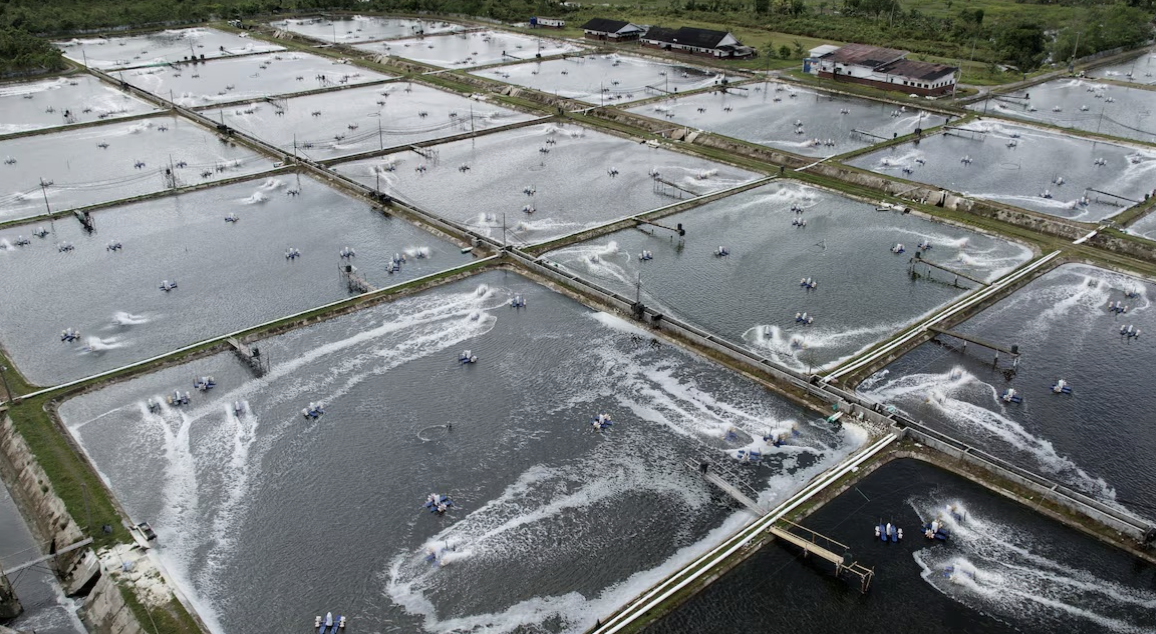

America’s decision last July 2025 to impose a 19% nontariff against Indonesia’s shrimp trade is the cause of a major shake-up in what was one of the most vibrant business relationships with the U.S. absorbing 60% of shrimp exports of Indonesia, valuing about $1.68 billion in 2024, straightforwardly. Thus, the introduction of tariffs has converted a significant risk vector into a sector that is the lifeblood of Indonesia and directly employs nearly one million workers.
This is a major blow to sea farmers such as Denny Leonardo of Java, whose future is now negatively affected, and over 100 new ponds for expansion have been frozen with him. Though the 19% tax is somewhat less than the 32% initially predicted, it remains a powerful demonstration of the loss of competitiveness of Indonesia’s shrimp, especially when compared with the Ecuadorian shrimp, as the American market will face a 15% relatively low tariff.
The American setback is Indonesia’s gain in the East. The campaign of shrimp producers to penetrate China’s market, where imports already exceed one million tonnes each year, has been launched. A woman who day before yesterday, was in Guangzhou to introduce the product to firms ordering the imports, restaurant chains, and the platform of e-commerce had been a recent delegation. From such a modest 2% to a target of at least 20% of China’s imports in the next five years is where the industry is now setting its sights.
Apart from China, Indonesia is venturing further. Some producers have already sent delegates to the Middle East, South Korea, Taiwan, and the European Union to seek new markets for their products. Discussions for a free trade deal with the EU, which could be a pivotal alternate export corridor and would further mitigate the hawk discontent caused by these tariffs, are at an advanced stage.
Though a signal of hope, it still entails a somewhat tentative outlook. Budhi Wibowo, the head of the Indonesian seafood association, comments that many U.S. buyers have already stopped purchasing from them. It is evident that the shift to the new market is not going to be quick and straightforward; the adjustment of the exporters from Indonesia to the new standards, tastes, and logistics of these markets is going to be necessary.
Being that this is the case, there are still quite a few industry folks who are very resilient. Just like Leonardo, the farmers advocate for the continuation of their activity under the current circumstances; at the same time, they admit that the future of development is constrained. “I think we can survive. But expansion, I don’t think so,” was his answer.
The abrupt change in U.S. policy has forced Indonesia to reconsider its export strategy, thereby steering the country’s shrimp sector into places it has never been before. Only time will tell if the switch to China and other markets will suffice to make up for the lost U.S. demand, but at this very moment, diversification has become not only a strategic option but a necessity as well.

