
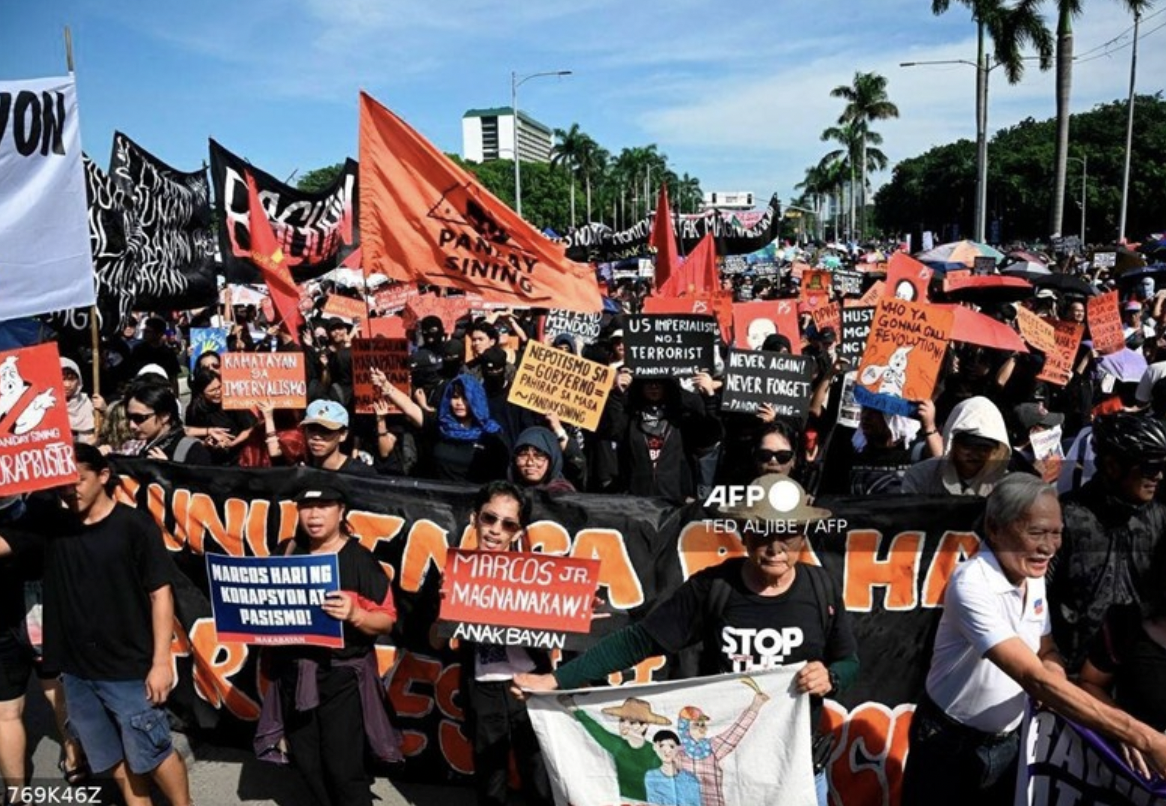

Whereby September 21, 2025, a throng of Filipinos gathered in downtown Manila to protest a major scam that flooded the control projects, one of the most significant graft areas in the Philippines. The projects that were supposed to shield the most vulnerable communities against floods are only “in their early stages of development or not.”‘ Officials’ calculations point to the government having been robbed of around 118.5 billion pesos (approximately $2 billion) by corruption between 2023 and 2025, though some green groups argue that the actual cut may hit $18 billion.
The rally started from spots like Rizal Park and EDSA and was quite calm at first; however, after that, the agitators came into contact with the police force. Protestors threw rocks and bottles, set tires afire, and made efforts to get close to Malacañang Palace—the residence of the President of the Philippines. The uprising reveals the people’s wide scorn for officious corruption and the idea of impunity experienced by officials of the highest-level hierarchy.
The scandal happened to be uncovered due to a rich couple who are businesspeople, the wife of whom said they were threatened and forced to pay bribes equal to 25% of the contract value of a project. They named 17 members of the House of Representatives along with some Department of Public Works and Highways workers. Upon hearing the news, President Ferdinand Marcos Jr. responded by setting up and independent commission to get to the bottom of it.
The political consequences of the scandal have been tremendous. Under the weight of public disapproval, the Speaker of the House, Martin Romualdez, and the Senate President, Francis Escudero, have stepped down. Some other officeholders have been ousted, and their properties have been temporarily immobilized until the court process concludes. The scandal has enormously intensified the rift in the government, thereby uncovering the unstable points of the political system, and testing Marcos Jr.’s skill in winning the public trust back.
The protests, in a way, appear to be linked to the past, continuing to be heard among people who were massively engaged in opposing the decision of Ferdinand Marcos Sr. to bring in martial law on September 21, 1972. The present-day demonstrations have shifted the focus from the fight against the regime to that of demanding accountability, transparency, and systemic reform.
To sum up, the occurrences demonstrate the interrelation of governance, corruption, and public mobilization in the Philippines. They hint at the difficulties that the incumbency may face in its fight against deeply embedded corruption, and also the energetic participation of voters in urging officials to be politically accountable and make reform.

