
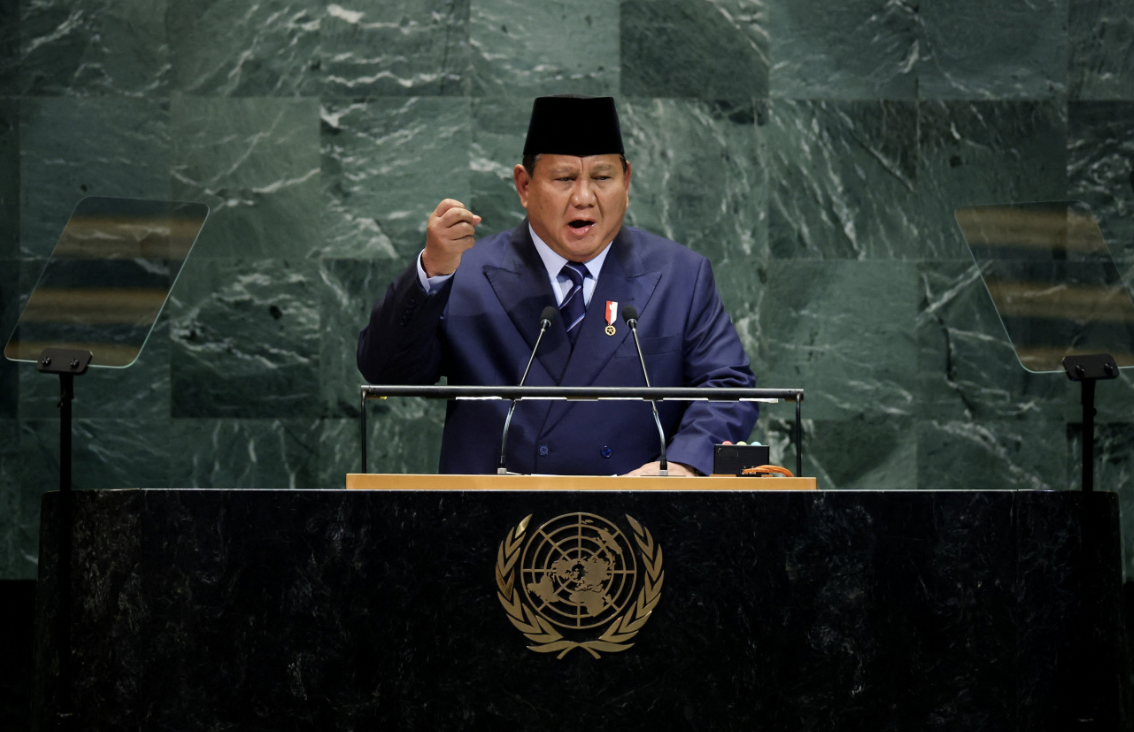

Prabowo’s first public statement at the United Nations more resembled a performance on his political career path than a gesture of international diplomacy.
His oratory was, nonetheless, a contrast of idealism and practical politics, putting Indonesia in the front row for world matters and, at the same time, gently hinting at a change of its position on, say, Israel, as a consequence of the commonplace application of realpolitik.
The bravura of his speech proclaimed Indonesia’s desire to be acknowledged as a global mediator and champion of universal rights. Yet, it is a podium-based internal power game that Prabowo plays.
Essentially, Prabowo tries to make himself out as the big boss, having the world as his stage. The gambit is to translate global prominence into domestic strength, to wield political power, and to reiterate his stock of leadership at home, as well.
Though the oration was supportive of Indonesia’s pledge to multilateralism and its participation in UN peacekeeping missions, it also outlined Indonesia’s diplomatic concessions to the intricacies of world geopolitics.
Experts thought that Prabowo’s decision, with an aim to contain the issue, to keep away from harsh criticism of Israel, indicates Jakarta’s dilemma of maintaining regional solidarity whilst striving for good relations with other important partners.
The main achievement of Prabowo at the United Nations was, thus, the ability to create a better image of himself worldwide and send internal messages alongside his goals of international prestige and earning political capital. It was a moment that highlighted his presence not only within the region but also as an agent of the globalized world and, furthermore, as a statesman-leader whose authority surpasses national confines.

