
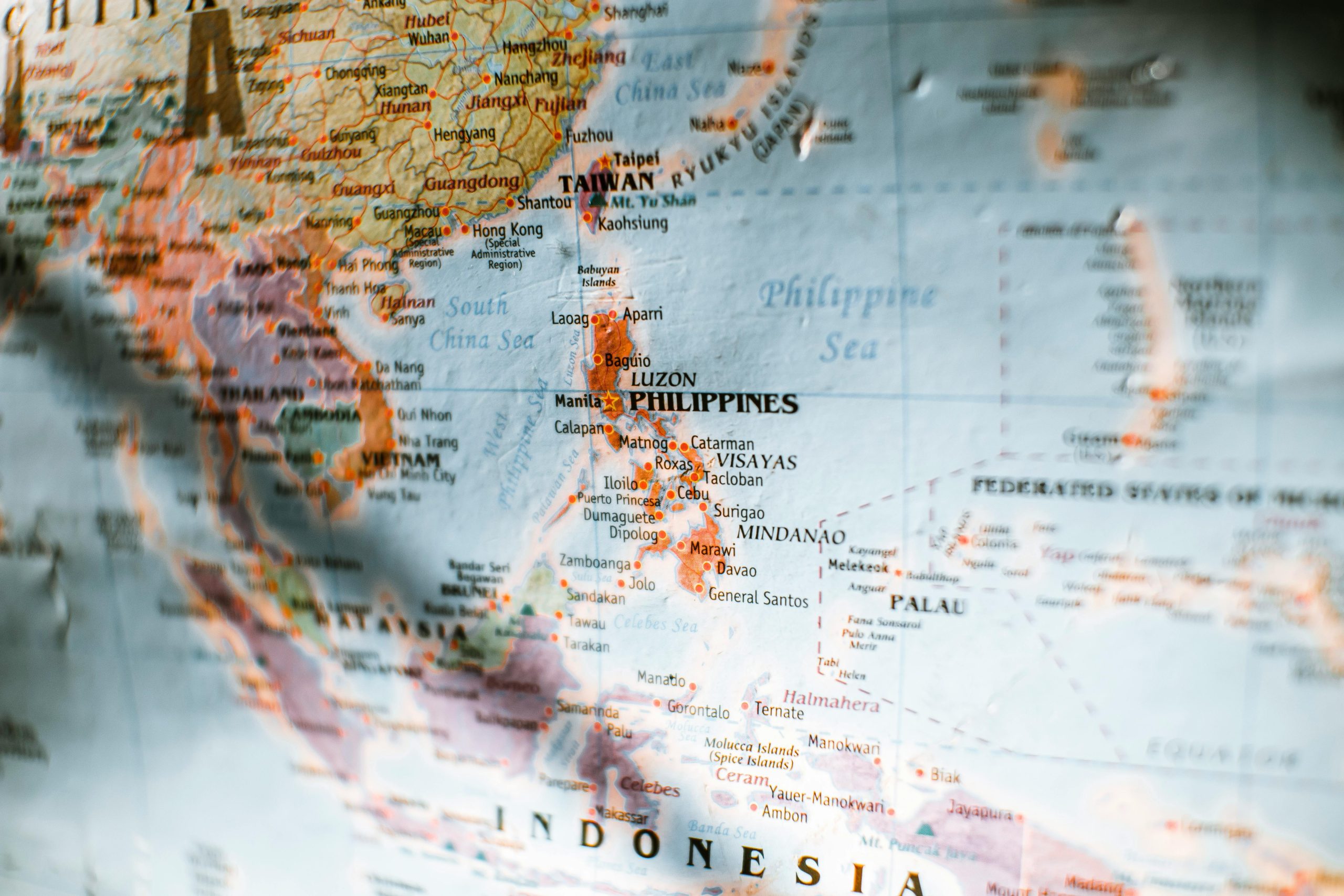

The direction of the Philippines’ foreign policy regarding China has become a prominent subject of public and political debate, fueled by ongoing maritime disputes in the West Philippine Sea and divergent stances among the nation’s key political figures. The discourse involves the current administration of President Ferdinand Marcos Jr., the preceding administration of former President Rodrigo Duterte, and other national leaders.
Recent events in the West Philippine Sea, the term used by Manila for the portion of the South China Sea within its exclusive economic zone, have been central to the discussion. The Philippine Coast Guard and Department of National Defense have reported multiple incidents involving Chinese Coast Guard and maritime militia vessels. These reports include the use of water cannons against Philippine supply boats en route to the BRP Sierra Madre at Ayungin Shoal (Second Thomas Shoal) and allegations of obstructive maneuvers against Philippine fishing vessels near Panatag Shoal (Scarborough Shoal).
In response to these events, President Marcos Jr. has stated his administration will not yield on matters of Philippine sovereignty and sovereign rights. In public addresses, he has emphasized a policy of defending the country’s maritime territory through diplomatic and operational means. The Department of Foreign Affairs has filed numerous diplomatic protests with Beijing concerning the actions of Chinese vessels. This approach has included strengthening security alliances, most notably with the United States, through expanded joint military exercises and reaffirmations of the Mutual Defense Treaty.
This policy marks a shift from that of former President Duterte, who pursued closer economic and political ties with Beijing. During his term from 2016 to 2022, Duterte often downplayed the 2016 arbitral ruling that invalidated many of China’s historical claims in the South China Sea, favoring direct dialogue and economic cooperation with China. Recently, Duterte has publicly criticized the Marcos administration’s more assertive posture in the West Philippine Sea, suggesting it could lead to conflict.
China’s Ministry of Foreign Affairs has consistently maintained that its coast guard’s actions are lawful and necessary to defend its sovereignty. Chinese officials state that their country has “indisputable sovereignty” over the islands and adjacent waters in the South China Sea and have called on the Philippines to cease what they describe as “provocative actions.”
The differing approaches have led to the use of political labels such as “pro-China” or “pro-US” within the Philippine political sphere to describe policy orientations. These terms are frequently used by politicians, commentators, and on social media to frame the debate over the country’s strategic alignment.
Public opinion surveys have reflected the complexity of Filipino views. Polls conducted by independent firms like Pulse Asia and Social Weather Stations have consistently shown high levels of public distrust toward the Chinese government, alongside strong support for asserting Philippine rights in the West Philippine Sea. At the same time, some business and political groups continue to advocate for maintaining strong economic relations with China, the Philippines’ largest trading partner. The ongoing debate highlights the competing national security and economic considerations facing the country’s leaders.

