
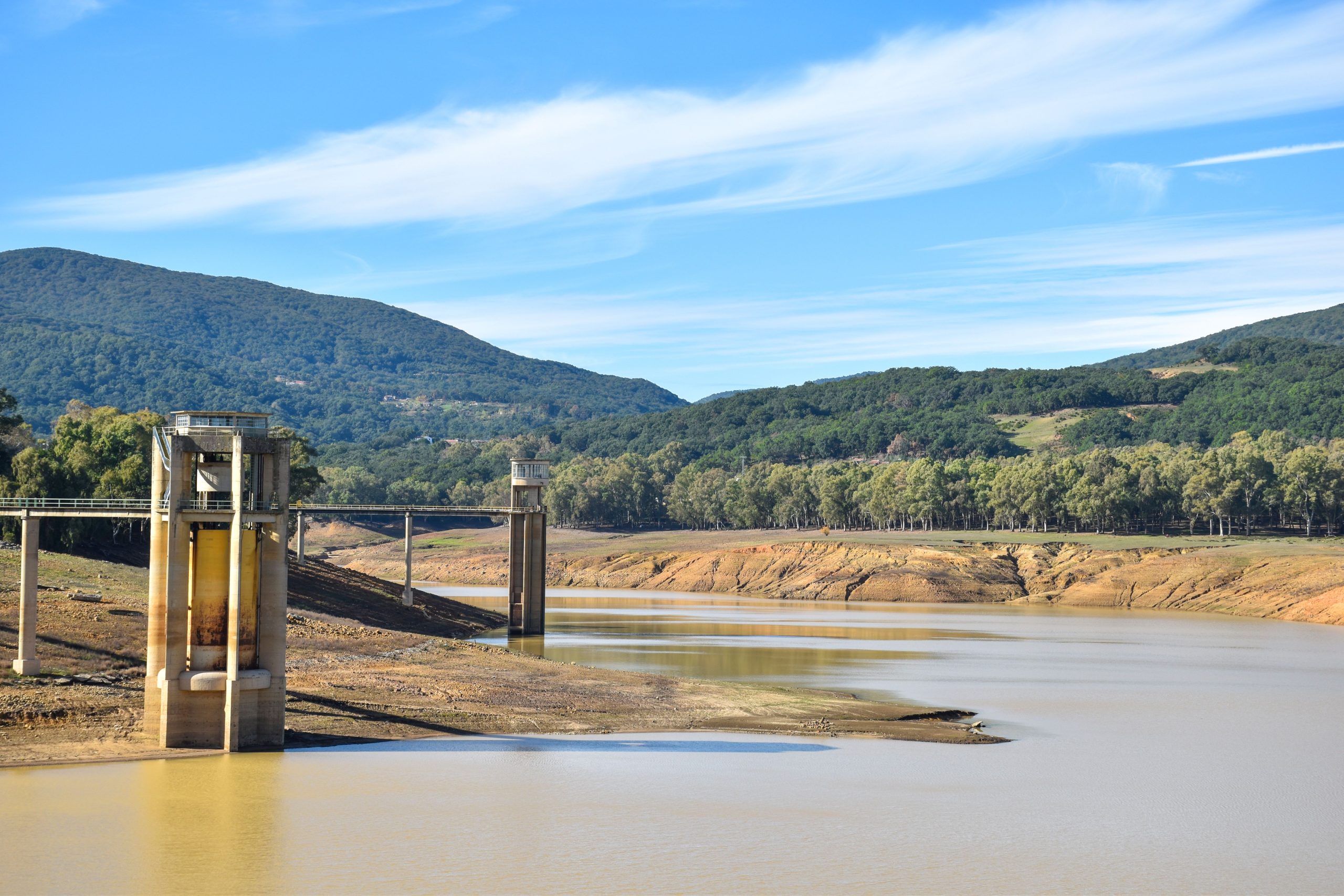

A 2023 World Bank report states that the planet is losing an estimated 324 trillion liters (85.6 trillion gallons) of freshwater annually. This observation is supported by satellite imagery from multiple international locations, which shows significant reductions in the surface area of various lakes, rivers, and reservoirs over the past several decades.
The report identifies drought conditions and land and water management practices as contributing factors to the trend. The findings were highlighted in the context of the United Nations’ World Day to Combat Desertification and Drought, observed annually on June 17 to promote public awareness of land degradation.
Case studies from different continents illustrate the changes to freshwater systems:
The Americas
In the United States, Lake Mead, the nation’s largest reservoir by capacity on the Colorado River, has experienced a notable decline in water levels. Satellite images comparing 1984 to recent years show a significant reduction in the reservoir’s volume, exposing large areas of its shoreline. The U.S. Bureau of Reclamation attributes the lower levels to a combination of long-term drought and regulated water deliveries to southwestern states and Mexico.
In South America, the Parana River, a key commercial waterway connecting Argentina, Brazil, and Paraguay, has recorded historically low levels. Imagery from the port of Rosario, Argentina, shows a narrower channel and exposed riverbed compared to previous decades. Officials in the region have linked the situation to multi-year droughts, which have affected grain shipping and hydroelectric power generation.
In Bolivia, Lake Poopé, a high-altitude lake, has become largely dry. Once the country’s second-largest lake, its basin appeared as a salt flat in 2020 satellite imagery compared to its state in 1984. The Bolivian government has cited factors including water diversions from its tributaries, drought, and warming temperatures.
Asia and The Middle East
The South Aral Sea, located in Uzbekistan, has shrunk by more than 90 percent from its mid-20th century size. The United Nations Environment Programme has described the change as a significant environmental event. The reduction is widely attributed to the diversion of the Amu Darya and Syr Darya rivers for agricultural projects initiated in the Soviet era.
In northwestern Iran, Lake Urmia, once the largest saltwater lake in the Middle East, has seen its surface area decrease to less than 10 percent of its 1990s extent. Iranian officials have pointed to consecutive droughts, increased agricultural water use, and the damming of feeder rivers as primary causes.
Africa
Lake Faguibine in northern Mali, historically fed by the Niger River, has remained mostly dry for several decades. Satellite data shows that reduced flooding from the river, prolonged drought, and sediment accumulation have prevented the lake from replenishing. In southern Madagascar, imagery of the Ambovombe region shows degraded landscapes, which local reports connect to multi-year rainfall deficits and sandstorms that have impacted water sources and farmland.
These examples are part of a larger set of observations documented by geological surveys and space agencies worldwide. The data consistently shows measurable changes in the volume and coverage of inland surface water across diverse climates and geographic regions.

