
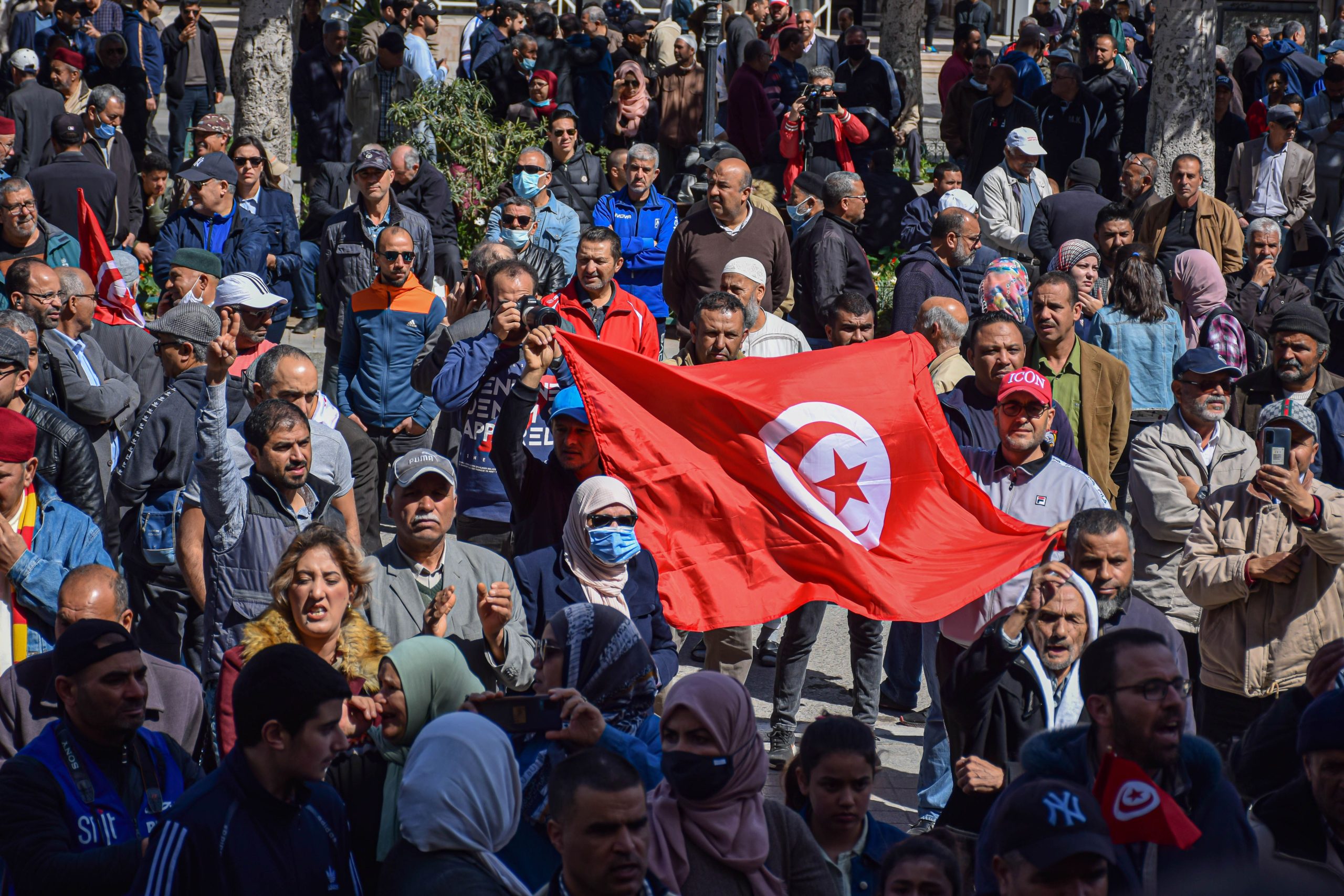

Demonstrators gathered in Tunis on Saturday to protest economic conditions and governance under President Kais Saied, five years after he suspended parliament and assumed broad executive powers. The protests coincided with reports of widespread power outages and a heatwave, while supporters of the president held separate gatherings in the capital.
The demonstrations on July 27, 2026, focused on issues including power cuts, water shortages, and the arrests of political opponents. Protesters in attendance voiced concerns over what they described as deteriorating living conditions. Meanwhile, counter-demonstrators expressed support for Saied’s government.
The country is currently experiencing a severe heatwave and wildfires, which have burned an estimated 4,400 hectares of land, according to figures cited in media reports. The state-owned electricity and gas company, STEG, has implemented staggered power cuts to manage increased demand.
President Saied has addressed the situation, stating that the power and water cuts “must end immediately” and that he is monitoring developments. He also stated that “the state will act firmly against anyone who tries to aggravate the situation in the country.” In parliament, Speaker Ibrahim Bouderbala called on citizens to avoid escalating anger over the shortages.
Human rights organizations and government critics have commented on the political climate. Salsabil Chellali, Tunisia director at Human Rights Watch, said in a statement to Al Jazeera that President Saied “buried Tunisia’s democratic transition and dragged the country back into authoritarianism.”
Since Saied assumed expanded powers on July 25, 2021, a number of his political opponents have been jailed, including leaders of the Ennahdha party. A law was also passed criminalizing the dissemination of information the state determines to be “fake news.” The government has stated these measures are necessary to combat corruption and reform the political system.
Several international analysts have weighed in on the situation. Hamza Meddeb of the Carnegie Middle East Centre described economic and physical hardships resulting from power cuts lasting up to 12 hours. Riccardo Fabiani, North Africa director for the Crisis Group, commented on the government’s approach to reform and its relations with international partners.
The European Union has entered into agreements with the Tunisian government aimed at managing migration across the Mediterranean. Neighboring Algeria has also expressed its support for Tunisia’s stability, with President Abdelmadjid Tebboune pledging to stand with the country against threats to its stability.
The Tunisian Prime Minister’s Office did not respond to a request for comment.

