
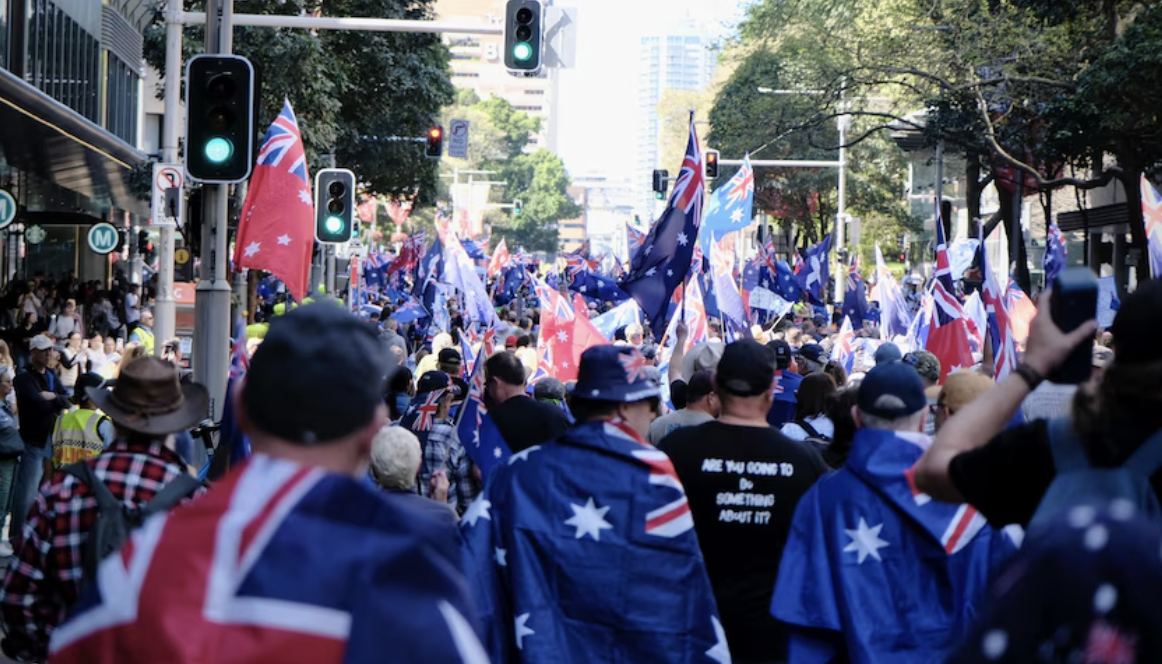

In a wide-ranging display of political dissent, thousands of Australians flooded the streets of several cities. Whereas groups had one thing in common, that being the protest, they had sharply different agendas, which resulted in disunity. On the one hand, Indigenous sovereignty and anti-racism activists mainly marched, demanding punishment for the violence that has affected First Nations communities lately and pointing out the root causes of society-wide discrimination. Meanwhile, on the other hand, right-wing protesters were propagating an anti-immigration, anti-government, and anti-surveillance agenda. They expressed a lack of confidence in the political elite and criticized the administration of Prime Minister Anthony Albanese.
As these different protests increase in numbers, political leaders warn that there is a danger of such diverse groups turning into political conflicts. In New South Wales, Premier Chris Minns stated that it is a risky thing when regard turns from political opinion into political hate, and he called on the police to step in if any protests become violent. The cities where police forces were heavily deployed included Melbourne, where the groups that were in opposition were kept apart physically so that fights could be avoided.
Demonstrations are also another aspect of Australia’s debate about what the national identity might be, as issues such as cultural diversity, the right to self-determination, civil and human rights, and the definition of mainstream versus extremist views have come to center stage. Topics that were mostly ignored in the past – like conspiracy theory-related anxiety over digital IDs, surveillance, or public health mandates – have become red-hot issues in the mobilization of political activists.

