
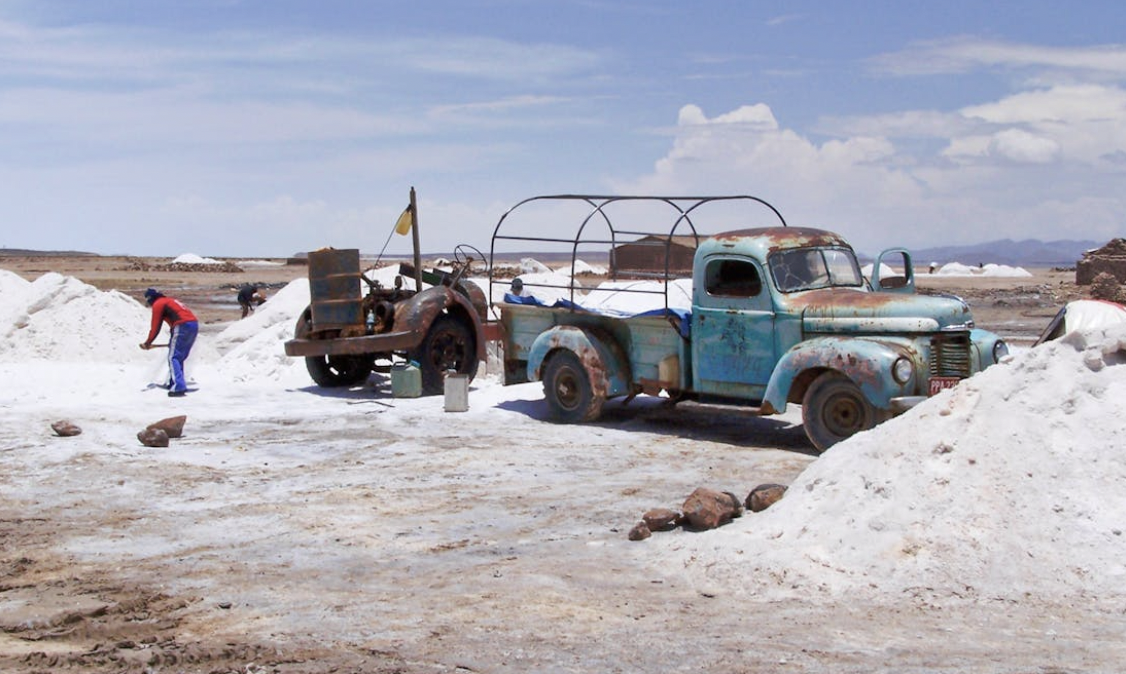

The South American country of Bolivia possesses lithium reserves in the Uyuni Salt Flats, with an estimation of more than 20 million tons, which could make the nation the center of the worldwide clean energy shift. For several years, the representatives in La Paz have been advertising the Uyuni Salt Lake as the cornerstone of a new economic model that will be capable of transforming the country into the “energy capital of the continent of South America.”
Nowadays, lithium is a must-have metal to make batteries for electric vehicles, and a lot of countries want to have access to it. So it happens that Bolivia’s reserves should bring success to the country as they are a very important piece of the clean energy puzzle.
On the other hand, the reality of the situation is quite the opposite. Despite multiple media-sensitive projects (worth more than two billion dollars) with Chinese and Russian companies, the level of industrial output remains very low. Lithium production by the state-owned company is far from what the measures required should allow. Contracts signed by foreign investors are yet to obtain parliamentary approval, which has suspended the projects in the area of politics and law. At this point, the issue of Bolivia’s lack of credibility arises, giving more weight to the question of whether it can fulfill its dreams while nearby countries such as Chile and Argentina are getting ahead by the way of turning their reserves into profit.
The political layer is even more complex. The residents who are close to the salt beds of the Uyuni play the indigenous communities card and claim more protection, proper consultation, as stated by the Bolivian constitution and international law. They declare that projects have been gasped and that their signs of life have been ignored in the chase for money. These resistances have led to lawsuits, placard demonstrations, and intensified government versus grassroots agitator confrontations. The issues would get Bolivia far away from the lithium roadmap if these were left unattended further.
The environmental issues have become a loud voice in the political arena. The exploitation of lithium involves the consumption of large quantities of water for the evaporation process. The opponents are also concerned that there are fragile wetlands that could be destroyed, and there could be the possibility of tradition-based people (such as the herders of llamas and the growers of quinoa) losing their livelihoods. The Bolivian opposition, using these problems to browbeat the government, envisioning the debate not only as an environmental fight but also as a matter of social justice and sovereignty, is particularly active with elections knocking on the door.
On the economic side of things, the game is played at a very high level. The entire planet could benefit from this rich source of lithium embedded in the bowels of Bolivia; the country could get so much money through the export of the natural resource, new industries could come to the country, and so on. However, if things went overboard, then all the problems coming from the political and environmental sides would scare the investors away, leaving Bolivia behind in the race for the clean energy sector.
The government’s challenge is to win foreign investment while at the same time ensuring that communities benefit and ecosystems are protected, which is a very difficult balancing act. At this time, Bolivia’s dream with lithium is still more of a promise than a fact. It will not be until this balancing act between politics and the economy that the question of whether the country will be a front-runner in the global green economy or just another example of resource-rich but squandered will be answered.

