
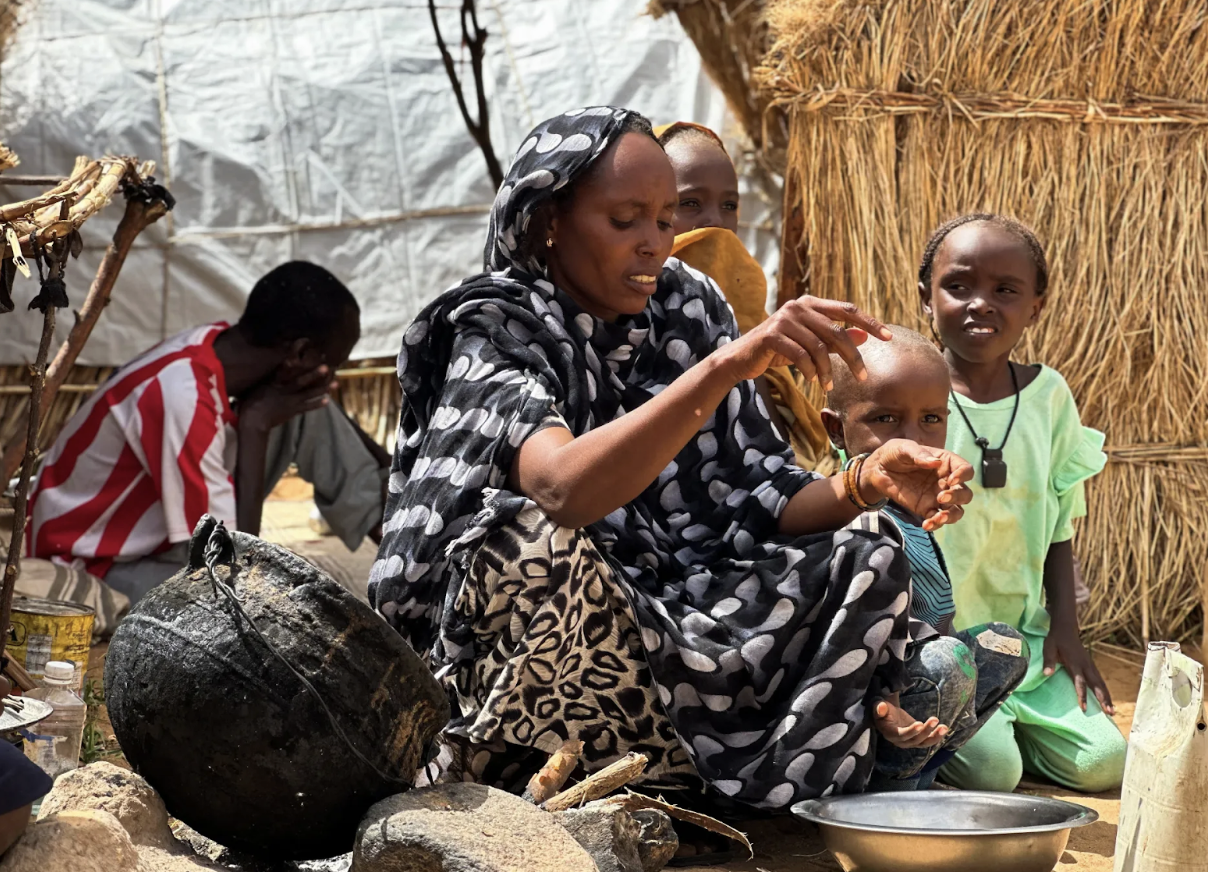

El Fasher civilians alongside those in the displacement camps are going through a serious lack of food as the paramilitary Rapid Support Forces have put the area under siege, which has led to shortages of food and hyperinflation.
In the absence of aid convoys, which are blocked, and with the shutdown of essential services, the inhabitants are feeding themselves with livestock fodder, called “umbaz.”
According to the Integrated Food Security Phase Classification, the situation in areas of North Darfur, including El Fasher, has deteriorated to the extent of famine.
Cholera cases have increased considerably with more than 190 deaths reported throughout Darfur, while displacement camps have difficulties with water and sanitation.
Access for humanitarian activities is still blocked by RSF checkpoints and ongoing clashes. Consequently, the delivery of food through cross-border corridors has been stopped, making 500,000 people living in the Tawila displacement camp in grave danger of going hungry.
This awful situation is a result of the general conflict that started in April 2023 between the Rapid Support Forces and Sudanese Armed Forces. As a result of the war, more than 12 million people have been forced to move from their homes both within the country and across the borders, and almost 25 million people have been put at risk of acute food insecurity all over the country.
If humanitarian access is not granted immediately and international support is not provided, the phenomenon of starvation will spread to the neighboring areas.
What market collapse for food products and continuous blockades of aid, which are the main causes of the current situation, drive what the UN authorities are calling one of the worst humanitarian crises in the world.

