
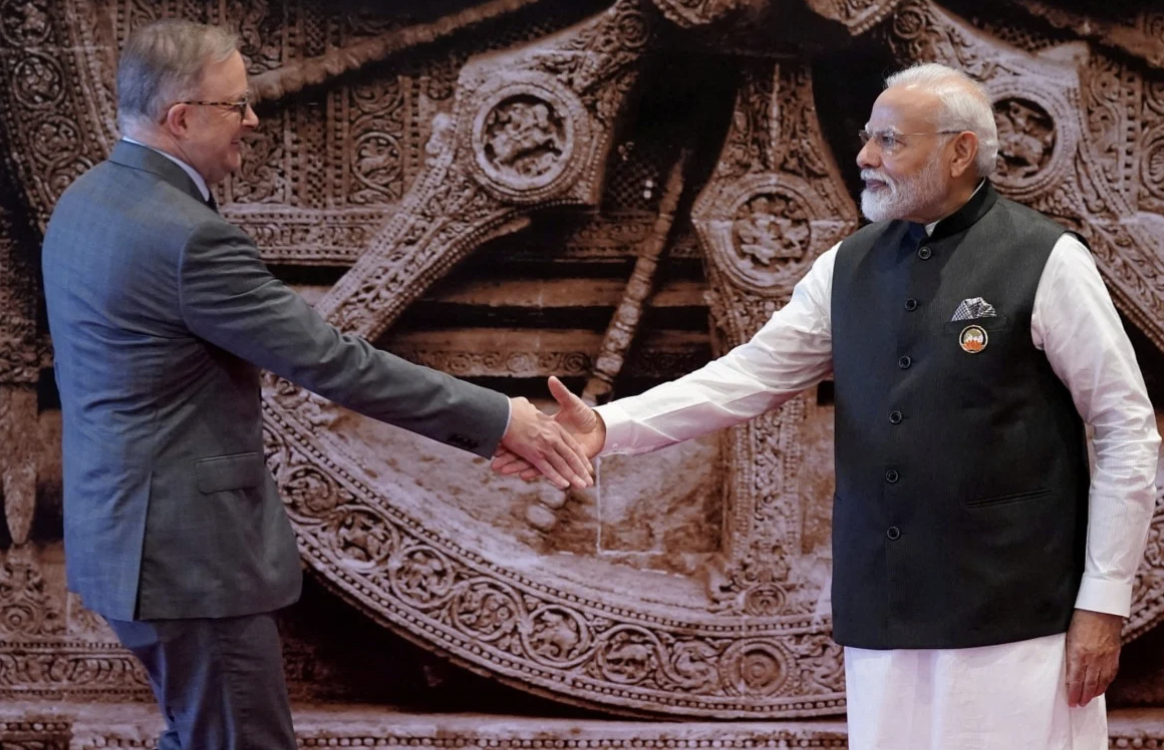

India and Australia have announced a strengthened partnership aimed at challenging China’s longstanding control over the global rare earth market, a sector vital for high-tech manufacturing, defense systems, and clean energy technologies. The collaboration comes amid escalating geopolitical tensions and supply chain vulnerability concerns as the world’s usage of rare earth elements is growing for everything from smartphones to electric vehicles.
Rare earth elements are not as rare as the name indicates, but are difficult to extract and process in a profitable way. At present, China has around 85% of the total global rare earth resources and the capacity to refine them, which in turn gives the country the needed leverage in the global trade and high technology field. In response to the political disputes, Beijing has, in the past couple of years, dropped hints on cutting exports, basically targeted at the complainants, warning them that the overdependence on a single supplier is something to be feared.
This strategic alliance with the block states of Australia, within the scenario of becoming the “Make in India” world hub, is completely in line with India’s aim of turning into the global manufacturing hub under the premise of “Make in India.”
Moreover, it will also have the benefit for the already Australia-oriented heavy rare earth mining industry with at least one less doubt in the future in like in 10 or 15 years, when other minor producers appear in different parts of the world. That’s stabilising the industry by having politically aligned sources and markets on the opposite side in Asia, which means no worries about their access to Chinese buyers.
This deal shall comprise collaborative exploration activities, the building of advanced processing facilities with international funding, and thorough research to open up refining methods beyond Chinese technologies.
In addition, the realm of looking at metals beyond the uses of just one critical resource and pioneering change in the concept of the metal scarcity question with popular resources as lithium and cobalt, which are battery materials and electric vehicle components, becomes very advantageous for the countries by tying their resources and research efforts together.
From a political aspect, the linkage is a very clear message that even those powers that are not predominant could coordinate their positions and action in cutting down on Chinese dominance of the world’s economic strategy and supply of strategic resources besides it being a factor in broader Indo-Pacific security co-operation where India and Australia along with Japan and the United States have been operating in the Quad framework to enhance resilient supply chains and safe maritime trade routes.
Both countries are taking steps to introduce more players into the supply of rare earths with the goal of stabilizing the global economy and signaling their respective geopolitical strength. Experts argue that the partnership could have a contagion effect of similar pacts by other countries on a reshaped market, making China’s position closer to a monopoly hard to maintain. Yet, alternative routes will be years away and costly to build.
However, on the other hand, before that time, the joint strategic plan of both India and Australia reflects a positive, long-lasting perspective which is about blending not only economic fitness but also strategic stance in the resource rivalry that politics and not only minerals make. In the case of a win, this would be the start of production of the rare earth industry that is more balanced and competitive on a global scale.

