
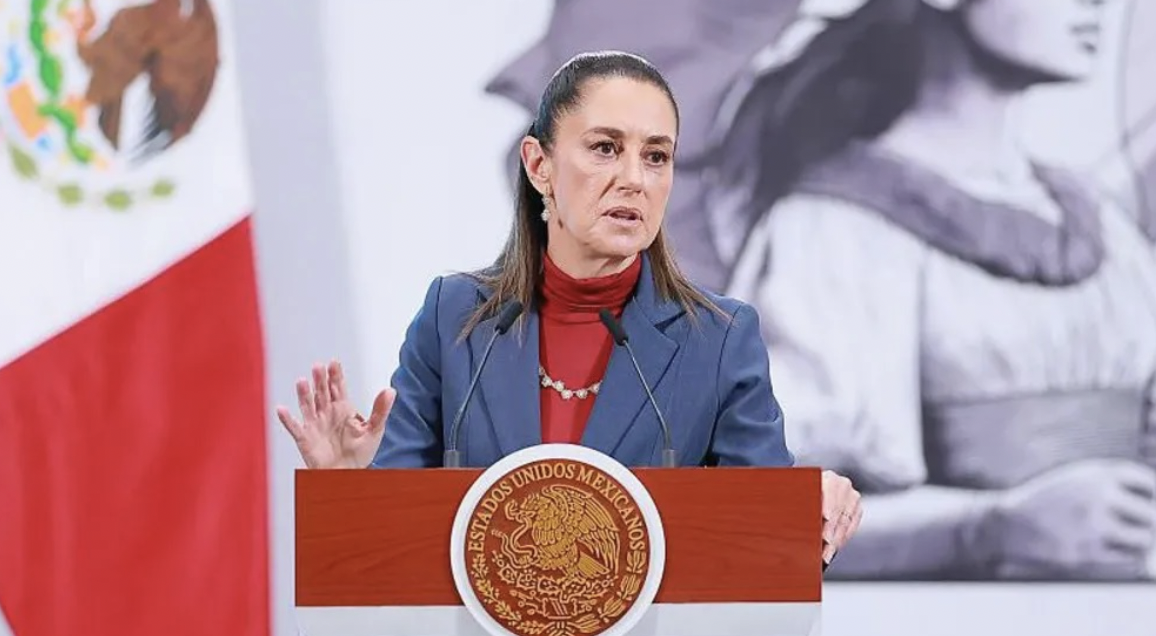

Mexico’s president, Claudia Sheinbaum, has made it very clear with a strong political message that no foreign troops will be operating on Mexican territory. She made this comment in reply to speculations that U.S. President Donald Trump secretly allowed the Pentagon to carry out military operations in Latin America to fight the drug cartels.
The military from the United States is not going to come to Mexico, said Sheinbaum on Friday. We can cooperate, collaborate, but there will be no such thing as an invasion. It is not just that it is ruled out; it is absolutely ruled out. In her statement, she reaffirmed the continued Mexican political line – the defense of national sovereignty from foreign military interventions.
The mentioned order is a consequence of Trump’s decision to label the most dangerous drug cartels in the world as terrorists. Along with six Mexican cartels, Trump named in total of eight organizations as terror groups. It should be noted that the move allows the US government to take more legal and operational measures against those groups, but at the same time, it raises several sensitive political issues in Mexico, such as sovereignty, jurisdiction, and the possibility of foreign intervention.
Sheinbaum acknowledged that her government had received the notification about the terrorist classification but insisted that it did not imply the involvement of the army. She asserted that when the suggestion of the US military involvement was brought up, Mexico had “always said ‘No.’” She commented earlier, “The US cannot use this designation as a pretext to penetrate our sovereignty.”
Secretary of State Marco Rubio defended the action, saying in Washington that the cartels should be confronted like armed terrorist organizations. In doing so, he anticipates a shift in US political rhetoric, which could be a reason for taking military steps other than intelligence-sharing or law enforcement cooperation.
The White House has categorically denied the existence of this military directive, as they state that Trump's main concern is home security. However, the report by the New York Times seems to imply that the order extends. A legal base for the chance of direct surgical operations. Against cartels, both at sea and on land.
From the political side, the question is whether such a matter is within the limits of U.S.-Mexico cooperation or to what extent it respects the sovereignty of the two countries. While on the one hand, both administrations have acknowledged the recent success of the border closure to illegal crossings that hit historic lows and fentanyl trafficking that has been drastically cut down, on the other hand, the comments by Sheinbaum show an unequivocal rejection of any type of military intervention.
Her viewpoint embodies her country’s long-standing political/cultural apprehensions in Mexico, where the U.S. recurring historical interventions have a lingering influence on public opinion. The presence of foreign soldiers in Mexico, no matter under which security banner, might provoke an uprising against the government from within their own population and, at the same time, damage one of the most outstanding bilateral relations in the region.
For the time being, Mexico is positioning itself as a partner that is willing to cooperate on the issue of organized crime, but one that is independent politically, and thus, allowing the government to remain in control of the territory.

