Nigeria made known its decision to prohibit the sale of raw shea nuts for six months on a Saturday. The ban aims at the export that is the source of the beauty industry’s uptake of the creams.
At State House in Abuja, Vice-President Kashim Shettima made the announcement describing Nigeria’s current level of market as “unacceptable.”
The country is the largest producer of the world’s shea nut with almost 40% of the total annual shea nut crop, but it only has 1% of the $6.5 billion global market.
Nigeria is said to have 350,000 tonnes of production annually and about 25% of it, which goes out of the country through informal trade, is unregulated, according to the report of Agriculture Minister Abubakar Kyari.
According to Shettima, the ban will only help Nigeria to move better and faster from being a country that exports raw nuts to a global supplier of the refined shea products.
The government sets itself a goal to make the shea industry bring to Nigeria $300 million of foreign exchange annually, up from a present figure of $65 million.
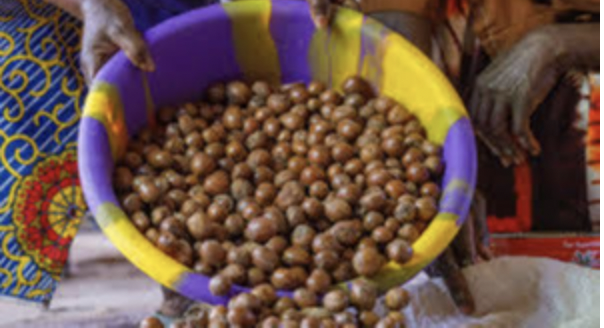
Shea nuts that are still in their shells have to be crushed, roasted, and boiled so as to derive the oil that is used in the shea butter production. The butter is used for both the cosmetics industry and food production of sweets such as chocolate and ice cream, in addition to the pharmaceutical field.
Dr. Ahmed Ismail of the Federal University of Minna told the BBC that farmers often do not realize the high value of the shea nuts and are being taken advantage of by businessmen who go to remote villages to buy their crops cheaply.
According to Ismail, the policy is a measure that ought to have been taken long before and that should be accompanied by improvements in the regulation.
The shea trees are of natural growth in the “shea belt” that spans from West to East Africa and small-scale farmers, who are mostly women, are the ones that plant and harvest in these areas.