
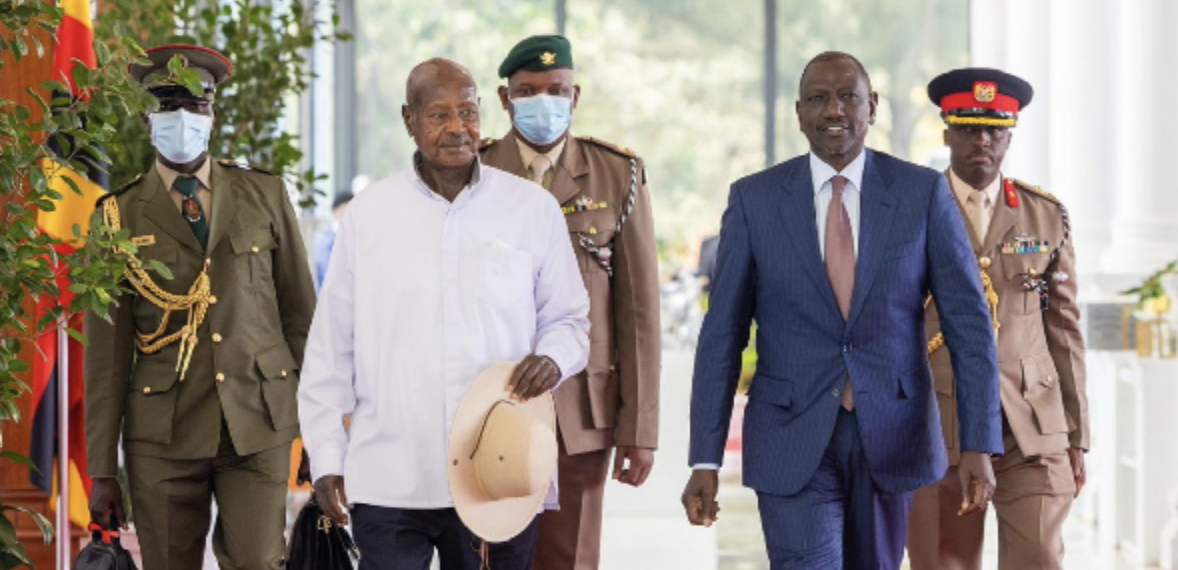

Kenya’s William Ruto and Yoweri Museveni of Uganda met in Uganda on August 1, 2025, and had bilateral discussions mainly about improving trade relations and regional integration in the East African Community.
The two leaders jointly complained about the present non-tariff barriers that hinder the free movement of goods within the member states.
During their joint address, the presidents identified unnecessary inspections, bureaucratic delays, and inconsistent border procedures as primary obstacles to regional trade. They went on to say that all the EAC treaty protocols, especially the Customs Union and Common Market frameworks, ought to be comprehensively put into practice.
The leaders pointed out that these already-agreed protocols need to be more effectively implemented to open up the gamut of possibilities.
On their part, the two presidents gave a nod to the deepened economic cooperation between their countries and pointed out the importance of regional value chains as promoters of sustainable growth.
Notably, infrastructure development such as roads, railways, and energy connectivity was among the issues that attracted the leaders attention as the main pillars of the East African economic take-off.
President Ruto reiterated that it was necessary for EAC institutions to take a more engaging stance with quicker dispute resolution mechanisms and faster integration processes. President Museveni made it clear that the openness of the market should be balanced with the protection of the local industry through cooperative strategies that benefit all the member states.
Both the leaders agreed that it would be very good if the private sector gets more involved in overcoming the logistical and policy challenges.
The East African Community is a regional bloc of seven member states with ambitious integration goals to set up a single market and a political federation in the long run. But the trend in the past has been that trade disputes have lingered, national interests have clashed, and there have been many gaps in infrastructure which have slowed down the progress of the integration agenda.
It is anticipated that the impact of this event will influence the future EAC deliberations, where both leaders will be calling on their colleagues to put measures in place that will provide solutions to the problem of trade frictions.

