
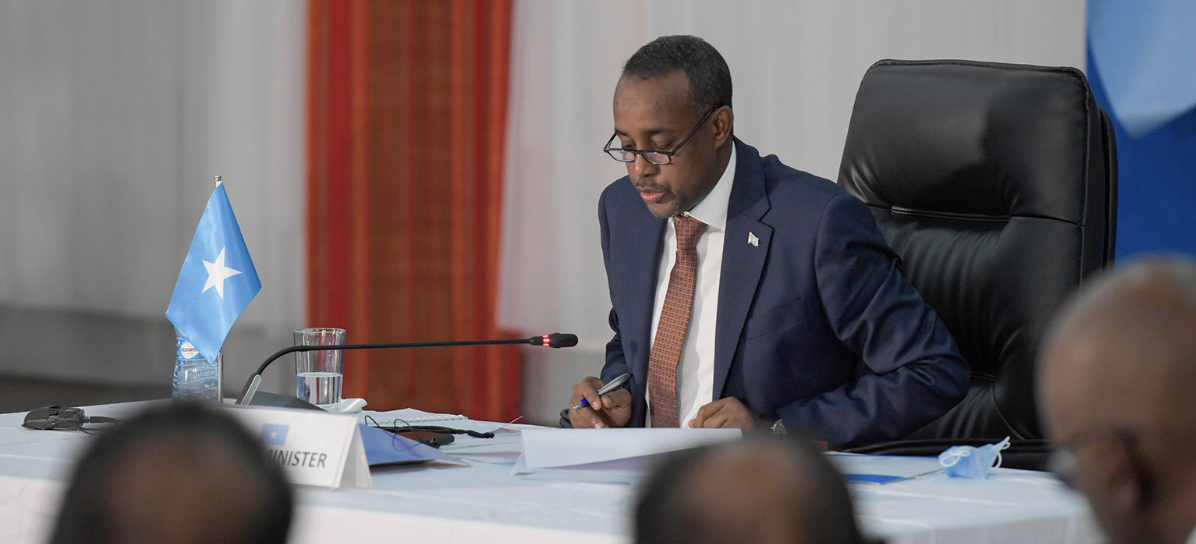

Due to the summit held in Mogadishu that ended without a consensus on Monday, the federal government of Somalia and the regional leaders have been unable to reach an agreement regarding the format of the next national election.
The core of the disagreement between them is the manner in which a direct one-person, one-vote system is implemented as some regional administrations want to keep the existing clan-based indirect voting model and hence are against the new system.
President Hassan Sheikh Mohamud and Prime Minister Hamza Abdi Barre held a meeting with the executive of Puntland and the leadership of Jubaland during a call with federal member state presidents.
Though the discussions were meant to cover the issues of composition, voting mechanisms, and amendments in the constitution, they, in fact, did not yield any positive results regarding the achievement of the legislative and institutional reforms that are a prerequisite to the elections process.
The local leaders of Puntland and Jubaland have claimed that the proposed direct elections and recent constitutional changes will draw power to the center and, thus, weaken the state autonomy.
The opponents have accused the direct voting system that has been put forward of bypassing the power-sharing arrangements that have existed since the introduction of Somalia’s 2012 provisional constitution that the latter is the underlying reason for the implementation of the system.
The impasse in the elections is occurring when Somalia is preparing for the withdrawal of the African Union Transition Mission. According to the experts, the delay might make the country even less stable with the al-Shabaab insurgency threat continuing.
Foreign partners have been calling upon Somali leaders to unite and present a common front, thus, preserving democratic legitimacy and ensuring the continuation of the transition.
Somalia has been plagued by electoral delays several times in the past, for example, the 2021 presidential vote that was scheduled for February but never took place.
The indirect systems were tailored to reflect the clan dynamics within the fragile state environment, whereas the attempts to establish universal suffrage have not been successful and have failed to gain widespread support.
There are no new negotiations planned yet to clear up doubts about the genuineness of elections in 2026.

