
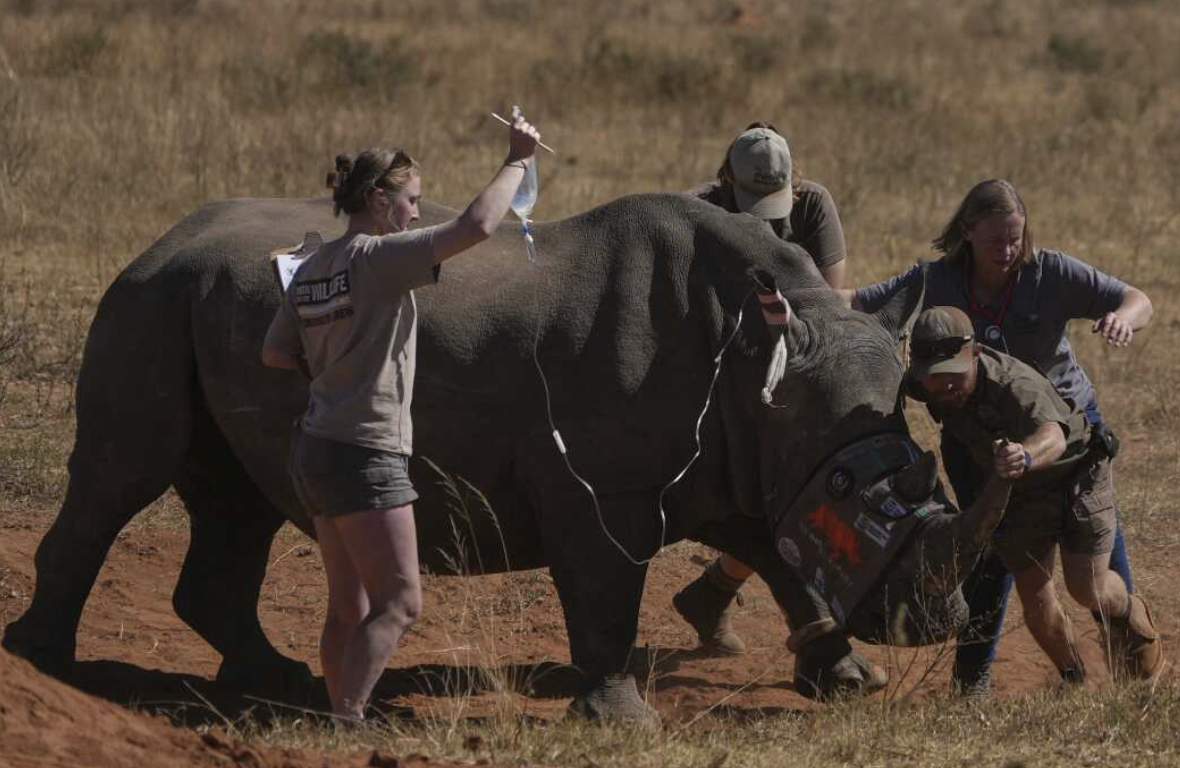

Scientists from South Africa, who are at the University of the Witwatersrand, have come up with the Rhisotope Project to protect the rhinos from extinction. The five rhinos, which were implanted with tiny amounts of a radioactive isotope, are the first participants in the new initiative launched on July 31.
The rhinos will be traceable by means of radiation portal monitors, which automatically check for radiation at international borders in order to make it difficult for illegal trade networks to transport and sell rhinos and to prevent the animals from being killed for their horns.
All tests made have confirmed the safety and effectiveness of the new method. A trial experiment with 20 rhinos in the middle of 2024 showed good results, with lab tests proving the animals’ health. The radioactive substances do not harm the rhinos in any way and do not change their normal behavior.
They are better than expected in terms of detection, with the simulation tests showing that the treated horns of rhinos can be found even if they are hidden in the transport container and suitcase. The isotopes can set off radiation alarms at very low levels, so the detection of the smuggling is very reliable.
Rhino we are in a world crisis has gotten so severe that at the beginning of the last century the numbers were about 500,000 and today they have fallen to only 27,000.
South Africa is home to about 16,000 rhinos but loses approximately 500 to the gun every year, where the demand largely comes from the Asian markets that are after the rhino horns for use as traditional medicine and as the top of the line of luxury goods.
The rhisotope project is one of the ways to turn the world’s nuclear security installations, which now include radiation scanners to detect illegal nuclear materials, for the safety of the animals. University officials talk about the possibility of this project extending over a large area and are inviting private reserves and the national wildlife authorities to be open for deditionary implementation throughout South Africa.

