
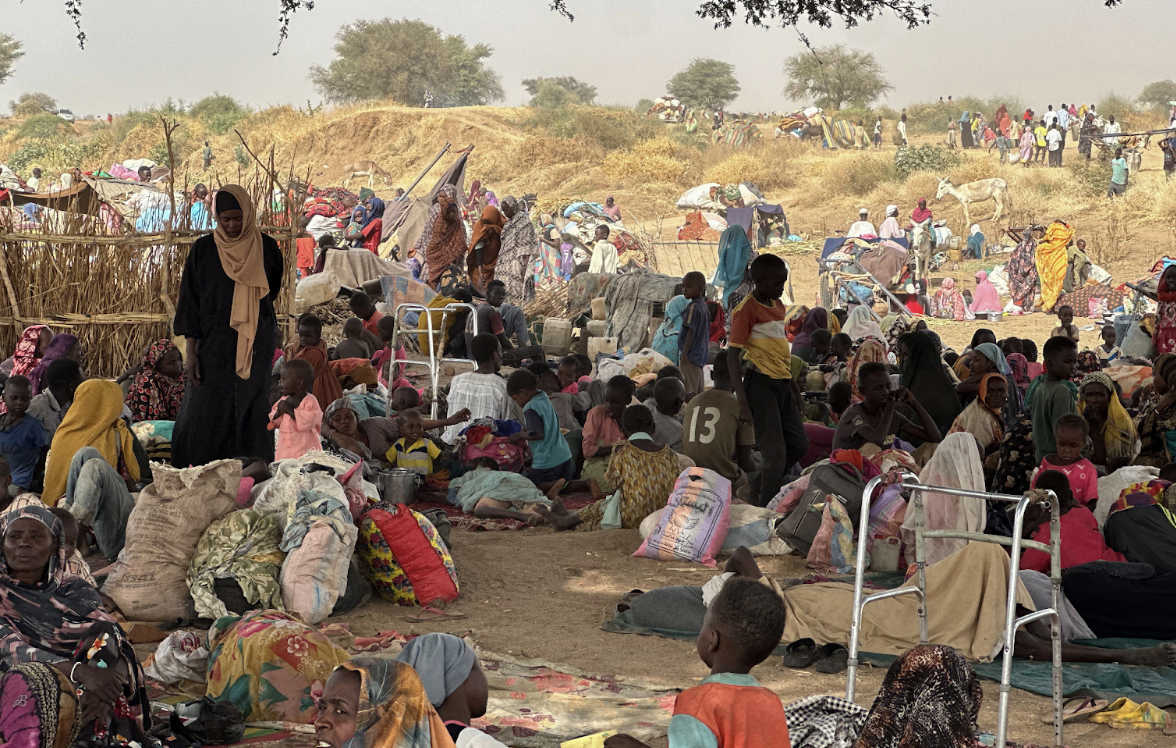

According to the United Nations, the hunger situation in Sudan’s Al-Fasher city continues to become worse, and it is almost turning into an emergency. The inhabitants of this area suffer critical food shortages, with almost 800,000 people in total, from which hunger is one of the least of their concerns.
This unfortunate situation has been caused by a continuous but at the same time violent fight between the SAF and RSF, in which, civilians have been trapped and it seems that no help is coming to them.
Al-Fasher is the last big city in Darfur region that is still under the control of the Sudanese Armed Forces. However, it is still surrounded and is one of the areas heavily affected by Sudan’s tragic war in April 2023.
Access is limited, and the fights have made it impossible for relief aid to get to the city; at the same time, the destruction of the city’s infrastructure due to the ongoing conflict has aggravated the humanitarian crisis.
The conflict’s repercussion in the Sudanese heartland is, therefore, serious beyond measure, and it is estimated that around 25 million people need immediate support, while the number of the displaced counts to over 10 million since the start of the fighting.
The inhabitants of Al-Fasher confirm that they have little water to drink and few essential medicines and food supplies, whereas malnutrition among those who are trapped is becoming more frequent.
The United Nations (UN) is faced with obstacles in its efforts to supply the World Food Program (WFP), aid agencies being unable to deliver sufficient supplies is a problem that started in early July and has continued since then.
The situation with medical assistance is terribly limited, and local hospitals are so overwhelmed with the number of patients compared to the resources they have that it is almost impossible for them to provide the necessary care.
Attempts at negotiating a truce have not been successful many times, and they have had at least two main consequences, the first one is the UN calling for the provision of safe humanitarian corridors, and the second one is the demand of compliance with international humanitarian law.
The conflict has escalated rapidly right after the failure of military leaders General Abdel Fattah al-Burhan and Mohamed Hamdan Dagalo to reach an agreement on how to share power, and as a result, it is nowadays ranked as one of the largest internally displaced situations in the world.

