
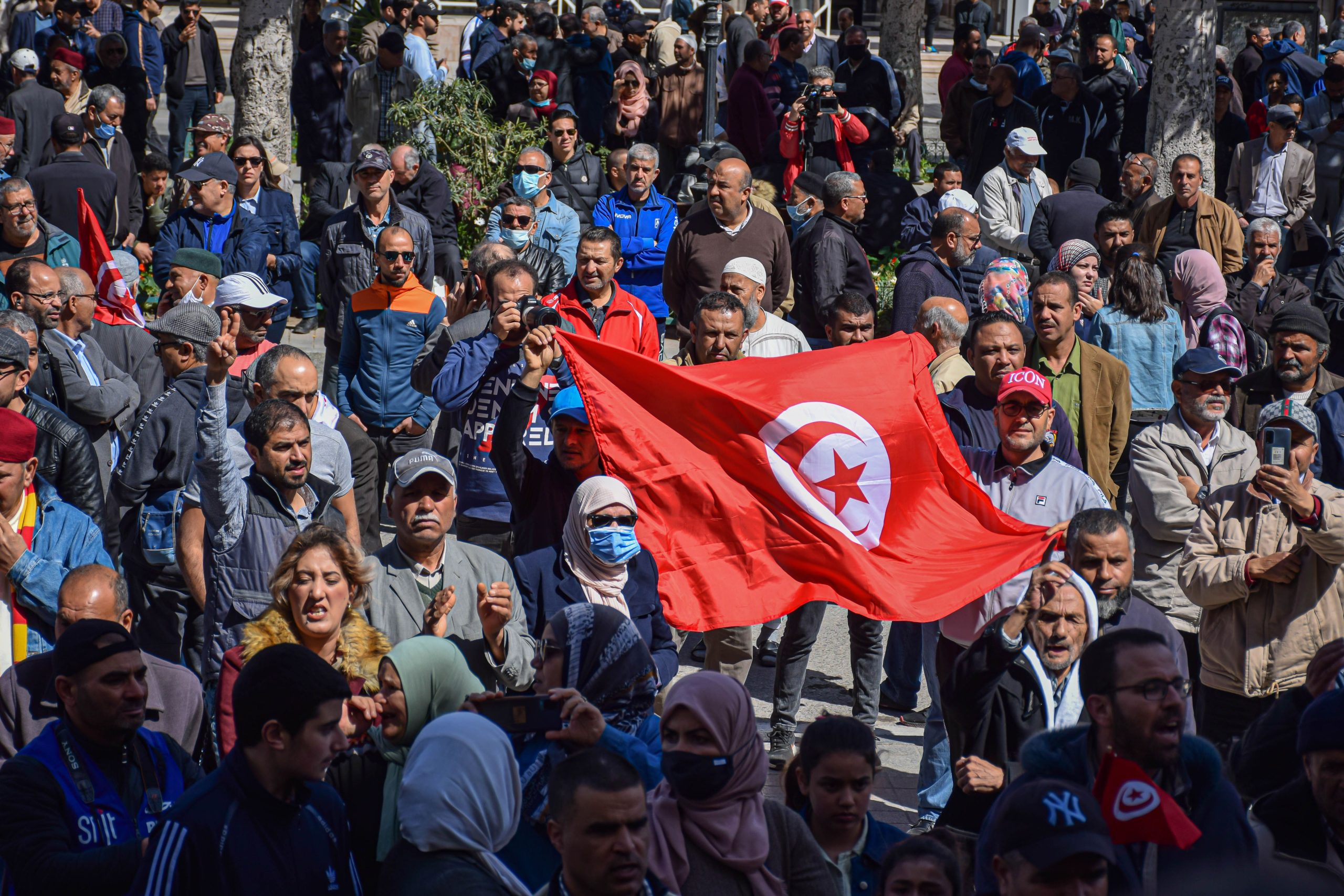

Thousands of protesters gathered in central Tunis on Saturday, July 25, to mark the fifth anniversary of President Kais Saied’s assumption of emergency powers and to call for his resignation.
Demonstrators marched along Habib Bourguiba Avenue, a main thoroughfare in the capital, carrying Tunisian flags and banners. The protest was organized by Nafas, an initiative that includes opposition parties and independent figures. Participants chanted slogans calling for “freedom, work and national dignity” and voiced opposition to the president’s policies, according to reports from the scene.
The event marks five years since July 25, 2021, when President Saied suspended parliament, dismissed the government, and began ruling by decree. He later formally dissolved the parliament and oversaw the drafting of a new constitution that expanded presidential authorities.
Opposition figures participating in the march stated their reasons for protesting. “We took to the streets today to hold the system of governance to account and to expose its failures,” Wissam Sghaier, a spokesman for the Jomhouri opposition party, told Al Jazeera.
Imed al-Khamiri, a spokesman for the Ennahdha party, told Al Jazeera Arabic that the protests included citizens concerned with the country’s economic conditions and the provision of public services, in addition to members of political opposition groups.
Since 2021, Tunisian authorities have arrested numerous opposition figures. Among them is Rached Ghannouchi, the 85-year-old former parliament speaker and leader of the Ennahdha party. In June, a court sentenced Ghannouchi to an extended prison term on security-related charges, which his party has described as politically motivated. Other actions taken by the government include the dismissal of dozens of judges and the passage of a decree that criminalizes the dissemination of information deemed false by authorities.
President Saied has maintained that his measures were necessary to address corruption and political gridlock that he said had paralyzed the country. He has denied that his actions have curtailed rights or freedoms in Tunisia.
The political changes of the last five years follow a period of transition that began after the 2011 revolution, which resulted in the removal of President Zine El Abidine Ben Ali and the adoption of a new constitution in 2014.

